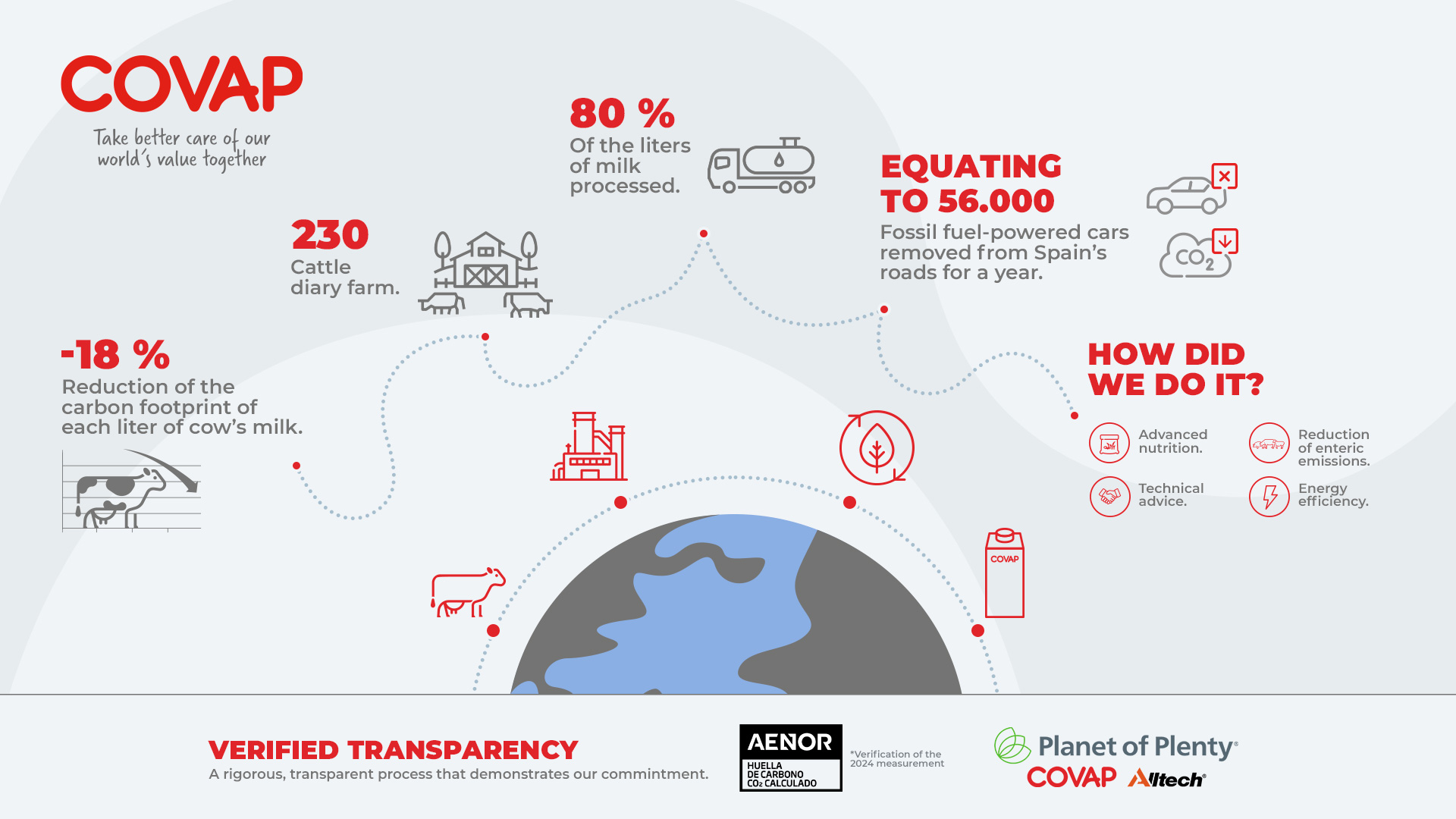
We have reduced the carbon footprint of every litre of cow's milk we produce by more than 18%.
Our Cooperative consolidates its sustainability strategy by reducing the carbon footprint of our cow's milk life cycle by more than 18%.
"At COVAP we don't measure just to see where we are, we do it to improve. This reduction is not just a number; it is proof of the real commitment of our farmers and technical teams to building more efficient, resilient, and environmentally-friendly farms and industries", stated Maria Dolores Lopez, COVAP's Corporate Affairs and Sustainability Director.
Methodology and technical collaboration
The Cooperative has carried out this project in collaboration with the American multinational Alltech, as part of its global Planet of Plenty® vision. The Alltech ECO2 tool, certified by Carbon Trust, has been used for the measurement and analysis of the data and to establish the guidelines for mitigation.
The project, which began in 2020, is based on an exhaustive annual assessment model. The Cooperative has assessed a total of 230 cow's milk farms, which represent around 80% of the liters of milk COVAP processes each year.
Thanks to the joint work of the livestock partners, the Cooperative's technicians, and Alltech's sustainability department, the 2024 measurement data has been favorably verified by AENOR.
In addition, since the initial phase of the project, COVAP has considered the measurement and mitigation of the environmental impact of the life cycle of its meat products (beef and lamb) in addition to that of its dairy products, positioning itself as the top industry in Spain, certified by AENOR, in terms of the implementation of a comprehensive project of these characteristics in the sector and having this verified.
Mitigation and achievements in farming and industry
The initial assessments of the life cycle of the cow's milk identified that the feed, enteric emissions, and the management of purinas were the main sources of emissions, representing over 90% of the total. For this reason, the greatest impact in terms of the reduction of our footprint comes from the work carried out on the farms.
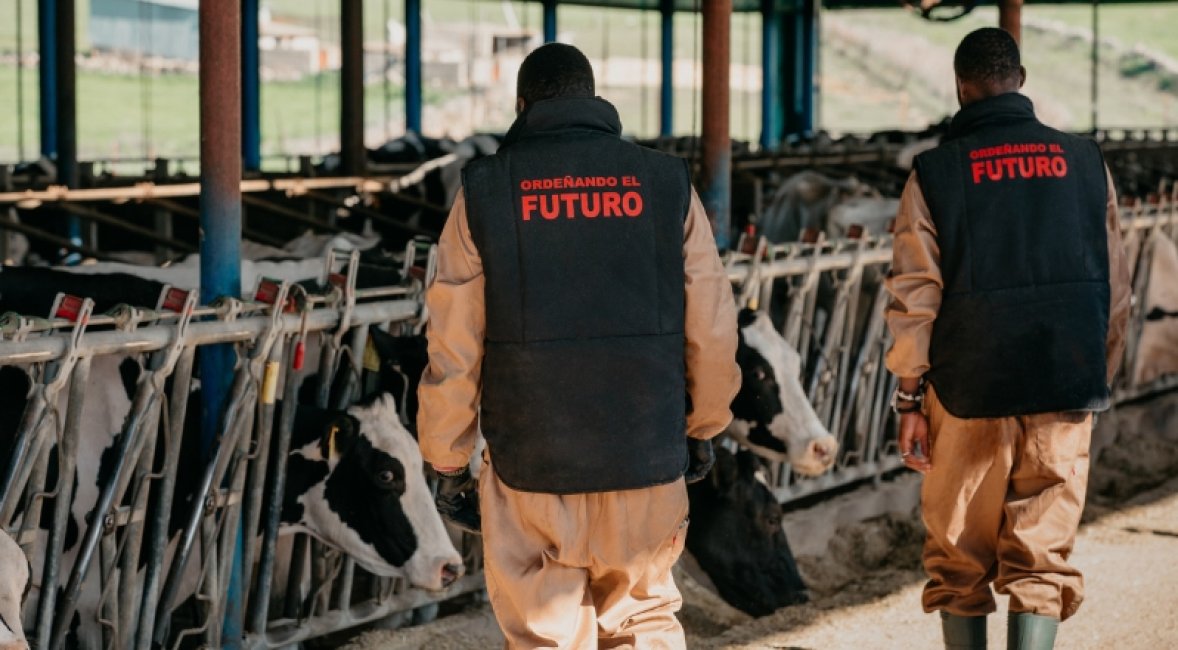
Faced with this evidence, we implemented measures involving advanced nutrition, the reduction of enteric emissions, and technical assistance for farmers, to advise farmers on handling, energy efficiency, and the use of renewable energies on the farms, focusing on animal welfare.
In the industrial phase, actions were carried out such as the implementation of the Cooperative's new energy model, as part of its commitment to renewable energy, and a change in thermal treatments, achieving a reduction in energy and water consumption.
These measures have had a positive, direct impact, achieving a reduction in the carbon footprint of each liter of cow's milk of over 18%. This reduction equates to the removal of around 56,000 fossil fuel-powered cars from Spain's roads for a year.
Next steps towards maximum sustainability
COVAP will continue to carry out personalized mitigation measures for all of its farms and industries, with a view to reducing the carbon footprint of all of its products.
The information obtained will be incorporated into the Covapps application, so that the livestock partners can easily check the environmental impact of their farms and compare this to the rest of the Cooperative. This indicator will be integrated as a key tool to support daily management and identify future opportunities for improvement.